Bruxism
Bruxism is repeated teeth grinding or jaw clenching, often during sleep. Because it may happen unconsciously, many people first learn they grind their teeth when a dental examination reveals worn enamel, small fractures, or damage to a filling or crown.
Occasional clenching may not cause lasting harm, but frequent or forceful grinding can place significant stress on the teeth, jaw muscles, and joints.
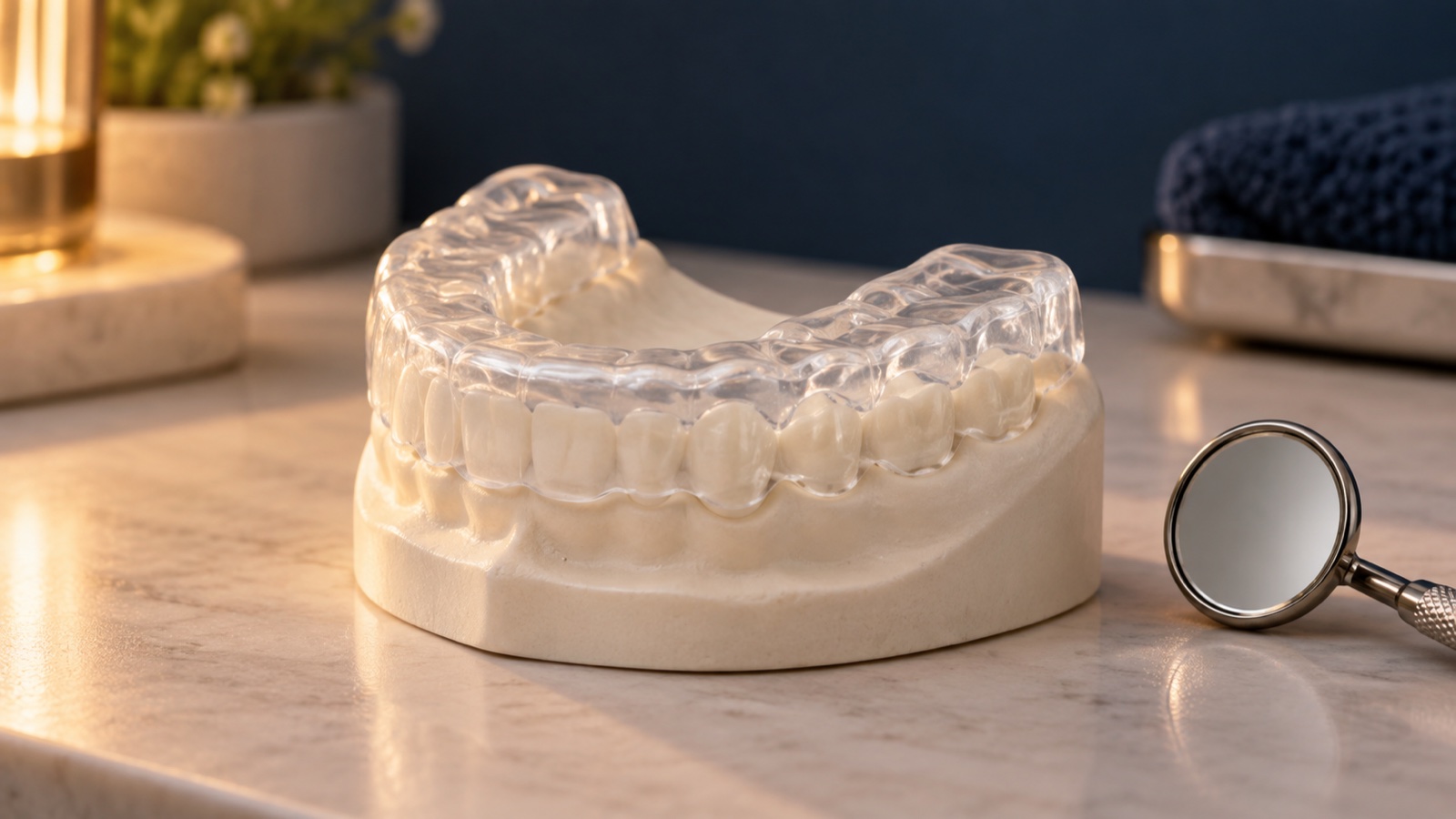
Clues to look for
Signs of Teeth Grinding
- Jaw soreness or stiffness after waking
- Morning headaches or facial discomfort
- Flattened, chipped, or unusually worn teeth
- Increased tooth sensitivity
- Damage to fillings, crowns, or other restorations
- A partner noticing grinding sounds during sleep
Bruxism can progress without obvious symptoms. Regular dental examinations help identify wear before more extensive damage develops.
Why Does Bruxism Happen?
Stress and anxiety can contribute to clenching or grinding, including during sleep. Sleep patterns, medications, bite relationships, and other health factors may also play a role. An evaluation helps distinguish bruxism from other sources of jaw or facial pain and guides the appropriate approach.
Small habits that may help
Relaxing the Jaw
Waking with jaw tension or noticing worn teeth?
Schedule a Consultation