Dental Bridges
A dental bridge replaces one or more missing teeth with natural-looking artificial teeth. Filling the open space can restore your smile, make chewing more comfortable, and help keep nearby teeth from shifting.
Dr. Song will evaluate the space, supporting teeth, gums, and bite to determine whether a bridge is the right option for you.
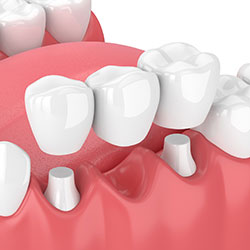
Completing your smile
How a Bridge Can Help
- Restores the appearance of missing teeth
- Supports clearer speech and comfortable chewing
- Helps distribute biting forces more evenly
- Helps prevent neighboring teeth from shifting
- Supports the natural contours of the face
How a Dental Bridge Works
A traditional bridge uses the teeth beside the gap for support. These abutment teeth receive crowns, while an artificial tooth called a pontic fills the space between them. The connected restoration is secured in place to create a stable result.
Bridges may be made from porcelain, zirconia, metal alloys, or a combination of materials. The best choice depends on the location of the missing tooth, the strength required, and how visible the restoration will be.
A carefully planned process
What to Expect
- Examine and planThe supporting teeth, gums, missing-tooth space, and bite are evaluated.
- Prepare and protectThe supporting teeth are prepared and an impression or scan is taken. A temporary bridge may be placed.
- Check and placeThe final bridge is checked for fit, appearance, and bite before it is secured.
Let’s find a comfortable way to complete your smile.
Schedule a Consultation